Laser Rust Removal: Where It Fits, and Where Blasting Is the Better Choice
Rust is not only a surface problem. On a weld seam it hides the flaw you need to inspect.
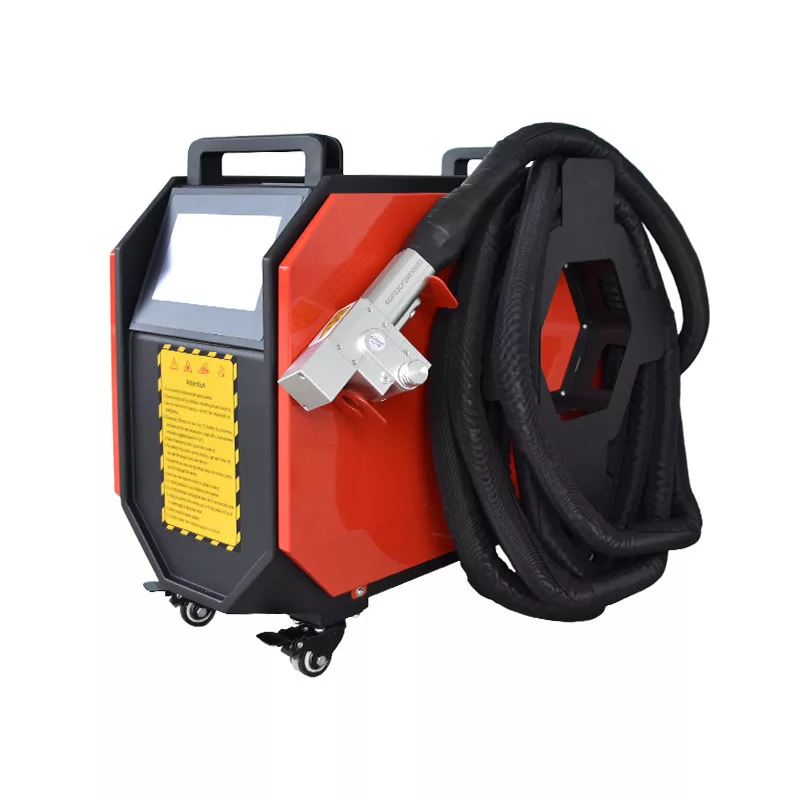
Rust is not only a surface problem. On a weld seam it hides the flaw you need to inspect. Before painting or coating it becomes the layer that the new system adheres to, which means the coating fails at the rust, not at the paint. On a tool or a mould, iron oxide changes dimensions and surface finish. On a machine part that has to go back into production, every abrasive you use to remove the rust stays somewhere in the plant afterwards.
Laser cleaning removes oxide by absorbing short, high-energy pulses into the oxide layer, which heats, expands and detaches from the metal beneath it. The base metal reflects and conducts more of the energy, so the process has a working window in which the layer goes and the substrate stays. That window is the whole subject. It is set by the material, by the thickness and structure of the rust, and by the laser parameters.
| Factor | What it decides | Why it matters for rust |
|---|---|---|
| Substrate | Steel, stainless steel, aluminium, cast iron | Each metal has its own absorption and heat behaviour |
| Layer type | Flash rust, firm oxide, pitted rust, mill scale | Loose films come off far faster than deep, pitted corrosion |
| Laser type | Pulsed or continuous source | Pulsed sources are usual for oxide removal on sensitive geometry |
| Working distance and angle | Energy density on the surface | Changes with lens choice and hand guidance |
| Access | Line of sight from the optic to the surface | The beam cleans only what it can reach directly |
Pitted rust is the honest limit. Where corrosion has eaten into the metal, the oxide sits inside the pits and the beam reaches the pit walls poorly. The result is a visually clean part with residue remaining in the depth of the pitting. Depth of effect depends on the surface and the contamination, which is exactly why a test on your own part is more informative than any removal rate quoted in general.
When Laser Is Not the Right Answer
Laser is a line-of-sight, hand-guided or robot-guided process with a defined working width. For a large rusted steel structure, a tank exterior or several square metres of weathered plate, sandblasting remains the faster and more economical route, and HD Cleaners supplies that equipment as well. For thick mill scale on hot-rolled steel, blasting is normally the better mechanism. For greasy, oily contamination rather than oxide, dry-ice blasting or dry steam is usually the more suitable technology. Laser earns its place on defined parts and areas: weld seams, moulds, tooling, selective preparation before welding or coating, and surfaces where abrasive media or water cannot be introduced.
Safety and the Working Environment
Industrial cleaning lasers are class 4 equipment. That means a defined controlled area, correct protective eyewear for the wavelength in use, trained operators and extraction of the fume and particles that the process releases. These requirements are not optional extras; they belong in the investment calculation from the start, together with the power supply and the space the system needs.
Equipment, Testing and Financing
HD Cleaners supplies laser cleaning systems, including its own TIPORA brand, from the showroom in Miercurea Ciuc, with its own service behind the machines. Before any purchase you receive the full technical datasheet with the actual power, pulse parameters and working width of the configuration being discussed.
Distance should not decide the question. You can visit the showroom, send or bring a representative part for a test, arrange a test on your application, or request an on-site demonstration where that makes technical sense.
Financing can be a direct purchase, GRENKE leasing, or AUTONOM long-term rental as an alternative to buying. For rental, monthly rental costs may be tax-deductible, depending on the client’s accounting and tax situation.
Questions Customers Ask
Will the laser damage my part? It depends on the material, the layer and the parameters. Thin sheet and aluminium need careful setting, which is one reason to test on a real part first.
Can it reach inside a tube or a blind bore? Only where the optic has direct line of sight to the surface.
Does rust come back afterwards? A bare, clean steel surface will re-oxidise in humid air. Plan the coating or protection step directly after cleaning.
Describe your part, your rust and your production situation to the team in Miercurea Ciuc, and you will get a technical answer on whether laser, blasting or another process fits.