Clean bottling lines with dry ice — no water, often without disassembly
Dry ice removes caramelised sugar, labels, adhesive and deposits from belts, fillers and sensors through a dry process — no water near electronics, often without full disassembly.
Washing the lines with water and detergent means protected electronics, hours of drying and the risk of mould from moisture left in hard-to-reach areas.
Bottling lines accumulate exactly the kind of dirt that is hard to clean: caramelised sugar, label adhesive, sticky residues — around the belts, fillers and sensors. Washing with water and detergent solves part of it, but brings its own costs: electronics to protect, hours of drying and residual moisture that encourages mould in the tight spots.
Dry-ice blasting avoids water entirely. The CO₂ pellets at -78.5 °C lift the deposits through thermal shock, then sublimate, so no water, sand or secondary blasting medium remains. Removed contamination still has to be managed. The process is dry, so sensors, motors and belts can often be cleaned without full disassembly, following the line’s safety procedures. In the right applications, the stop can be shorter than with wet washing; we measure the real effect on your line. Surface effect depends on substrate, contamination and process parameters; test sensitive surfaces first.
Below you will find the mechanism, the recommended equipment and what it means for downtime and hygiene.
Consequences
What wet line cleaning costs you
- !Long shutdown for disassembly, washing and drying
- !Risk to sensors and electronics from water
- !Residual moisture that encourages mould
- !Adhesive and caramelised sugar left in tight spots
- !High water and detergent consumption per cleaning
The solution
How dry ice cleans the bottling line
CO₂ pellets at -78.5 °C lift adhesive, caramelised sugar and deposits through thermal shock, then sublimate — they turn to gas without leaving water or granules behind. The process is dry, so belts, fillers and sensors can often be cleaned without full disassembly, following the manufacturer's procedures.
| Parameter | Value | Role |
|---|---|---|
| Cleaning medium | CO₂ pellets, -78.5 °C | Lift adhesive, sugar and deposits through thermal shock |
| Water in the process | zero | No cleaning water near the electronics, no conventional water-based drying stage |
| Residue | CO₂ gas and the removed contamination | The pellets sublimate; removed contamination still has to be managed |
- A dry process — no water near sensors, motors and electronics. Dry ice may be considered for some electrical applications, but energised equipment requires site-specific electrical safety review, equipment-manufacturer procedures and qualified personnel.
- The pellets sublimate on impact — no water, sand or residue to collect remains.
- Surface effect depends on substrate, contamination and process parameters; test sensitive surfaces first.
- Often without full disassembly; in the right applications, the stop can be shorter than with wet washing — we measure it on your line.
See it for yourself
The production line, cleaned without water
Curățare Linii de Producție Alimentară cu Gheață Carbonică • Cryonomic COB71 • HD CleanersCommentary in Romanian.
Who it is for
The same problem, across several industries
Recommended equipment
Recommended equipment: Cryonomic — dry ice
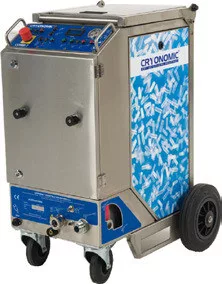
CRYONOMIC COMBI 71R
A professional dry-ice blasting system for sanitising bottling lines and packaging equipment — dry, no water, no secondary blasting medium.
ROI and risk
No water near electronics — downtime, measured on your line
- Often without disassembling the line; in the right applications, shutdowns can be shorter — we measure them at the demonstration
- Reduce the water risk to sensors and electronics
- No residual moisture that leads to mould
- AUTONOM rental: monthly rental expenses may be tax-deductible, depending on your tax situation
Frequently asked questions
What we get asked most
Can I clean the sensors and electronics of the line without ruining them?+
Does the whole line have to be stopped and disassembled?+
Does dry ice remove caramelised sugar and label adhesive?+
Equipment for your own team, or the work carried out for you?
We can discuss both, including working with the cleaning company that already serves you.
Discuss an industrial cleaning job (website in Romanian)Show us what needs cleaning.
We'll help you decide what to test first.
Send us a few details, photos or a short video of the application. Within one working day, a technical sales consultant will review it and come back with the next best step — additional questions, a first recommendation or a proposed test.