Stains and odours in a car are not hidden with chemicals — they are lifted out with steam
Steam at 185–190 °C and 12 bar lifts stains and reduces odours in car upholstery, while the integrated extractor immediately pulls out the moisture — so the material is not left soaked.
Baking soda and scented sprays cover the smell for a few days, and detergent poured onto the seats soaks the foam inside the upholstery. The moisture left in the material does not disappear — if drying is inadequate, it can promote mould and musty odours.
Anyone with a car that has stained seats or a persistent smell in the cabin usually tries the same things: baking soda sprinkled overnight, a scented spray, or detergent scrubbed straight onto the upholstery. The result looks good for a few days — then the smell comes back and the stains reappear. The reason is simple, and even a common-sense guide will tell you: the classic methods mask the problem or soak the material, instead of lifting the dirt off at the source and pulling the moisture out of the fibre.
Why the smell and the stains come back
Baking soda and scented sprays cover the smell, they do not eliminate it. Detergent, on the other hand, reaches the foam behind the material and leaves moisture there that nothing pulls out. Trapped moisture, in the heat of the cabin, can promote a mouldy smell and stains if drying is inadequate. And the aggressive scrubbing used to try to “get the stain out” tears the fibre and leaves halos.
What steam with extraction changes
Dry steam (machine’s nominal steam temperature: 185–190 °C) penetrates the upholstery fibre and dissolves the grease and the stains without detergent; the temperature actually reached in the material depends on the application. The difference from a simple steam machine is the extraction: an integrated extractor immediately sucks up the loosened dirt together with the moisture, so the material stays clean, thermally sanitised and barely damp — not soaked. The result is no detergent or disinfectant residue in the steam step, including on the surfaces touched by skin, children or animals, which is why the method is suitable in homes with allergy sufferers.
For a detailing shop, this is not just a cleaner method, but a new service: steam upholstery sanitising, which detergent-based competitors do not offer at the same quality. With two operators working at the same time — one on the interior, one on the exterior — a single machine finishes more cars per day, and the detergent cost per car drops; the total cost also includes labour, depreciation and maintenance.
See the result before you decide
We do not ask you to take our word for it. The mechanism is simple to show: a demonstration on real upholstery, so you can see how the material looks and smells after steam with extraction — and how little moisture remains. Below you will find the exact parameters of the recommended machine and what they mean for a car interior.
Consequences
What happens with the classic methods
- !Home remedies (baking soda, vinegar) mask the smell, they do not eliminate it at the source
- !Detergent soaks the foam inside the upholstery and leaves moisture deep down
- !Trapped moisture → risk of a mouldy smell and stains if drying is inadequate
- !Aggressive scrubbing breaks the fibre and leaves halos on the material
- !Chemical residue on the surfaces that come into contact with skin and children
The solution
How steam cleans upholstery — and why it does not soak it
Dry steam (machine's nominal steam temperature: 185–190 °C) penetrates the upholstery fibre, dissolves the grease and lifts the stains without detergent; the temperature actually reached in the material depends on the application. The integrated extractor immediately sucks up the loosened dirt together with the moisture, so the material stays clean and barely damp — not soaked.
| Parameter | Value | Role |
|---|---|---|
| Steam temperature | 185–190 °C | Dissolves the grease and lifts the stains with steam and fewer chemicals |
| Steam pressure | 12 bar | Penetrates the upholstery fibre, not just the surface |
| Extraction | integrated Ghibli extractor | Sucks up the loosened dirt and the moisture on the spot |
| Tanks | 5 L / 5 L (clean water / recovery) | Working autonomy between refills |
| Operators | 2 simultaneously | Interior and exterior in parallel, more cars per day |
| Power draw | 5.5 kW (with vacuum) | 100% electric, no combustion emissions in the workshop |
- Steam at 185–190 °C lifts stains and reduces odours in car upholstery, with fewer chemicals.
- The integrated extractor immediately sucks up the loosened dirt and the moisture, so the upholstery is not left soaked.
- It thermally sanitises the seats, the carpet and the headliner with no detergent or disinfectant residue in the steam step, including on the surfaces touched by skin.
- A single machine cleans the interior, the exterior and the engine bay with steam and extraction.
- Steam cleaning is suitable in homes with allergy sufferers and pets, because no detergent is left in the material in the steam step.
See it for yourself
Car upholstery, steam-cleaned — without leaving it wet
Revolutia în Detailing Auto: Descoperă Fortador Volt Electra! #aspiratorcuabur #detailingautoCommentary in Romanian.
Who it is for
The same problem, across several industries
Recommended equipment
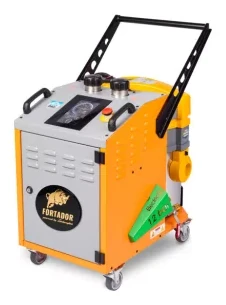
Recommended equipment: Fortador Volt Electra 12 Bar
Fortador Volt Electra 12 Bar
It combines steam at 185–190 °C with the integrated Ghibli extraction — exactly what car upholstery needs: it lifts stains and odours deep down, then sucks up the dirt and the moisture, so the material is not left soaked. 100% electric, 2 operators at the same time.
Price excludes VAT and shipping costs
ROI and risk
From a cost to a source of revenue
- A detailing shop adds a new service (steam upholstery sanitising) that detergent-based competitors do not offer at the same quality
- Two operators at the same time → more cars finished per day, with a single machine
- Fewer recurring chemical consumables: the cost per car drops
- 100% electric, no combustion emissions in the workshop — suitable for enclosed spaces too
- Financing: outright purchase, GRENKE leasing or AUTONOM (long-term equipment rental)
Frequently asked questions
What we get asked most
How do I clean my car upholstery of stains and odours with fewer chemicals and without tearing it?+
Does steam soak car upholstery?+
Is steam cleaning suitable for allergy sufferers and pets?+
Why do odours and stains come back after classic cleaning?+
I run a detailing shop — is it worth adding steam cleaning?+
Can the machine be financed?+
Show us what needs cleaning.
We'll help you decide what to test first.
Send us a few details, photos or a short video of the application. Within one working day, a technical sales consultant will review it and come back with the next best step — additional questions, a first recommendation or a proposed test.